FAMILY · FOOD · RECONNECTION
A Place at the Table: Family, Food and Reconnection
Written by Austen Anguina · Published November 24, 2026
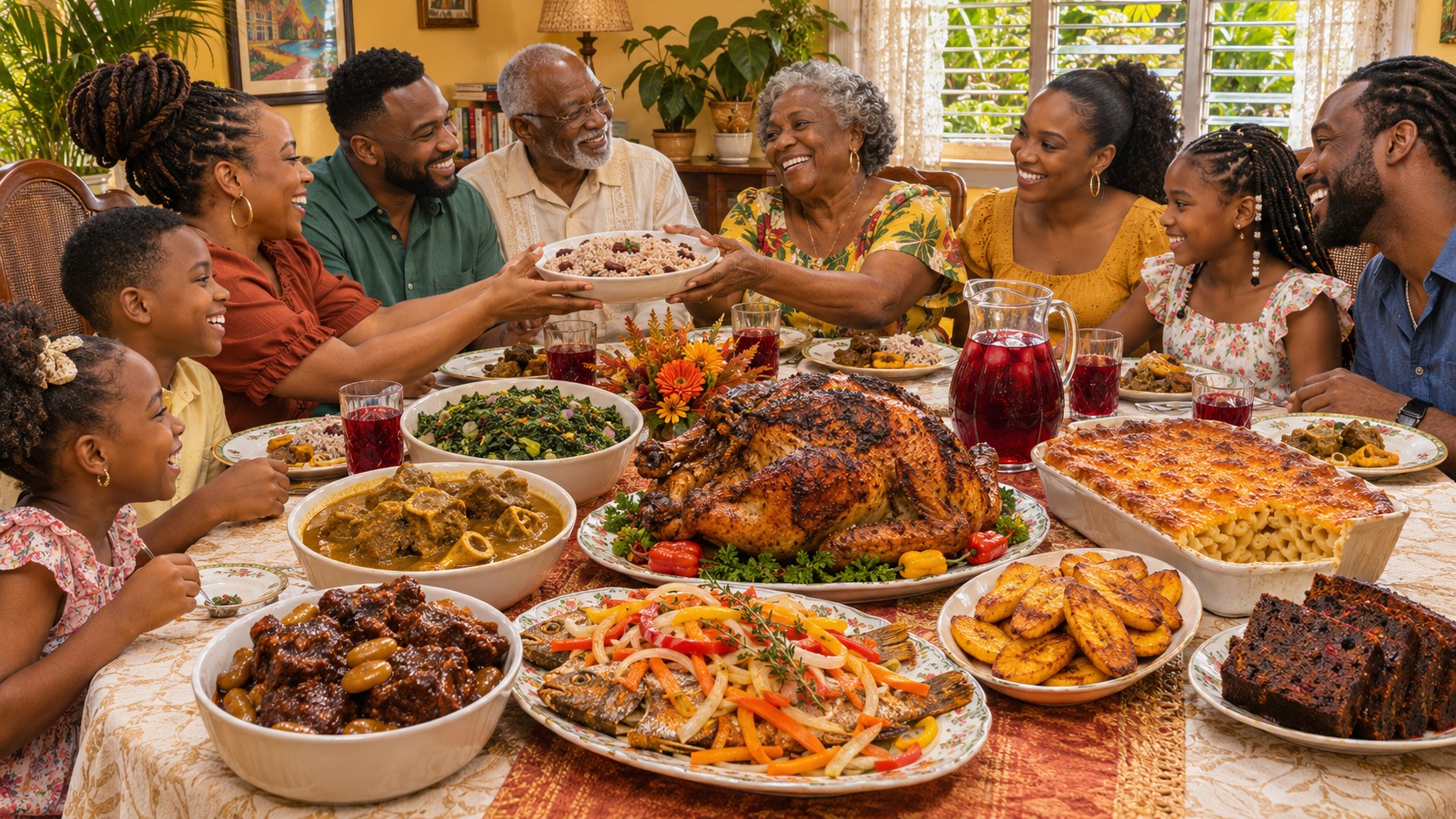
A chair pulled closer. A familiar voice across the table. Someone saying, “Tell me how you have really been.” Thanksgiving can give a family something precious: time to come together, reconnect and build relationships.
The food draws us in, but the people give the gathering its meaning. A generous Caribbean table is an invitation to linger: to listen to an elder’s story, catch up with a cousin and make room for someone who might otherwise spend the day alone.
Presence without a price tag
Holiday shopping and expectations around gifts can put pressure on families. At this table, nobody needs to earn their welcome with an expensive present, a fashionable outfit or a story of financial success. A person who brings a dish, helps wash up or simply comes through the door deserves the same warmth.
Christmas can also be a time of deep love and connection. The invitation here is to protect that spirit from the pressure to spend, compare and impress. Thanksgiving offers a chance to make the gathering itself the gift: a meal, a conversation and time together.
Caribbean flavour, shared generously
Imagine jerk turkey at the centre, rice and peas dotted with red kidney beans, curry goat, dark braised oxtail with broad beans, sweet fried plantain and a golden square of macaroni pie. Add callaloo, colourful escovitch fish, a glass of ruby-red sorrel and a slice of rich fruit cake, and the table becomes a conversation about home.
This is an imagined menu, not a rule for every Caribbean household. Family recipes, island roots, dietary needs and budgets differ. One well-loved pot shared kindly can carry as much meaning as a dozen platters. Nobody should feel obliged to buy every dish pictured in our illustration.
Let the cooking build connections too. Invite a young relative to season the pot with an elder. Write down the recipe that has always lived in someone’s memory. Ask about the Sunday dinners, migration journeys and people behind the food. A recipe can preserve a voice as well as a flavour.
Why Thanksgiving is a U.S. holiday
The federal holiday developed through presidential proclamations and congressional action. George Washington designated November 26, 1789, as a day of thanksgiving under the new Constitution. Abraham Lincoln’s 1863 proclamation established an annual observance on the last Thursday of November.
In 1939, Franklin Roosevelt moved the observance earlier, partly because of concerns about the Christmas shopping season. States followed different dates. Congress resolved the confusion in 1941, and Roosevelt signed legislation fixing federal Thanksgiving on November’s fourth Thursday. In 2026, that falls on November 26. The National Archives explains this history.
Make room for a real conversation
Reconnection does not happen just because everyone sits in the same room. Put the phones aside for a little while. Ask an open question and listen to the answer. Leave comparisons about salaries, possessions and achievements away from the table. Give a quieter relative time to speak.
For some families, a shared meal is a gentle first step after time apart. It need not force an apology, erase a difficult history or demand that anyone ignore personal boundaries. It can begin with a small, honest welcome and the willingness to keep building a relationship after the plates are cleared.
Save a plate for a neighbour. Call a loved one overseas. Invite someone to tell a story the children have never heard. When the meal ends, make a plan to speak again. The richest part of the table is the care that continues beyond it.