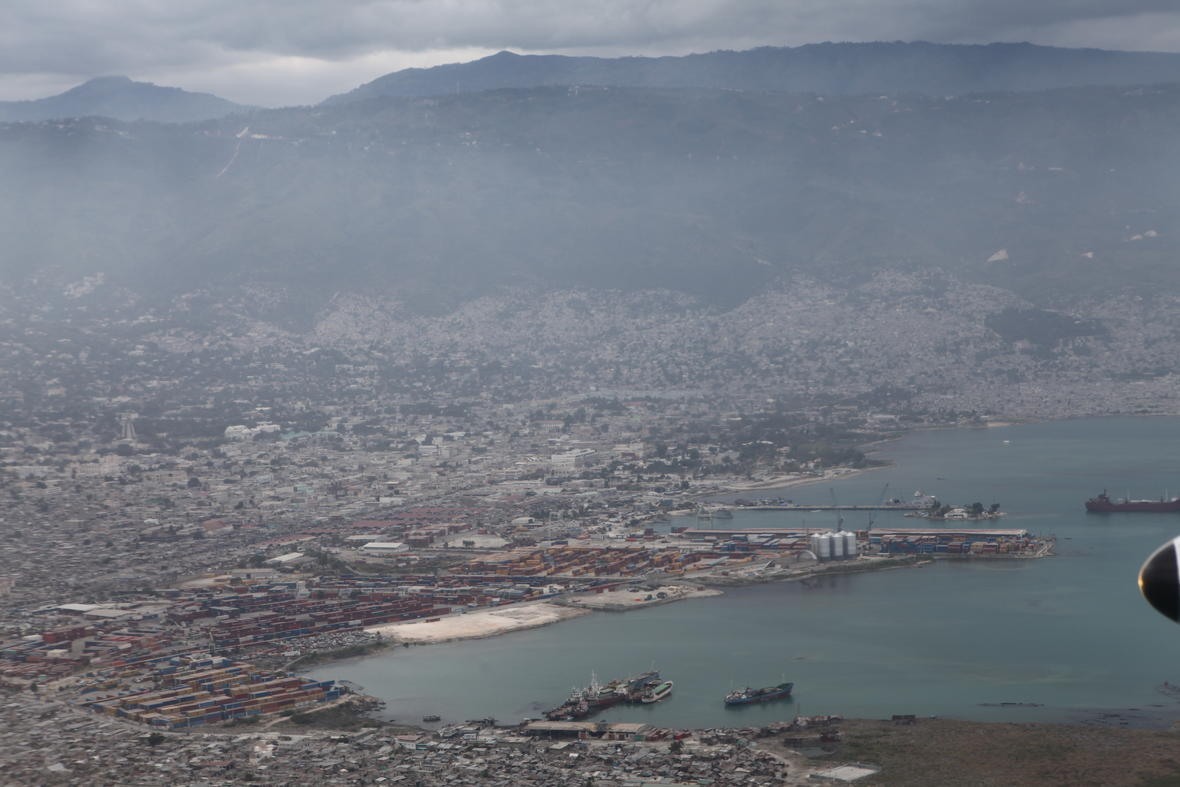
PORT-AU-PRINCE — Haiti has struck a deal with El Salvador to build new prisons on Haitian soil, the Associated Press reported Friday — three prisons, built by a Salvadoran company working alongside a Haitian firm, with the first one ordered expedited by Haiti's prime minister. Justice Minister Patrick Pélissier announced the agreement after an official visit to El Salvador, where he toured CECOT, the giant maximum-security prison that has become the symbol of President Nayib Bukele's war on gangs.
Standing in that world, Pélissier offered a line that should stop every Caribbean reader cold: "Once you enter, there is no hope of ever seeing the outside world again." He said it as praise.
Let us be frank, because this story deserves frankness. Is this patriotism — two nations standing together against terror? Is it philanthropy — a stronger brother lifting a weaker one? Or is it business as usual: the oldest industry in our hemisphere, locking up poor people of color, now with a fresh coat of paint and a foreign contractor?
The honest answer begins with a fact nobody in this story disputes. Haiti is drowning. Gangs control most of Port-au-Prince — the AP puts it at 70 percent of the capital; Reuters says more than 80; the United Nations has said up to 90. In March 2024, gangs stormed Haiti's two biggest prisons and freed more than 4,600 inmates. What remains of the prison system holds some 7,563 people at 313 percent of capacity, according to the UN's July 2026 report — 82 percent of them never convicted of anything, awaiting trials that may never come, in cells where 49 people died in the first half of this year alone. When thousands of Haitians marched on November 17 carrying signs reading "Thank you, Bukele," that was not ideology. As Haitian human rights worker Louimann Maceus told Al Jazeera, the support "comes from sheer desperation. People are exhausted."
And Bukele's results, in his own country, are real. El Salvador went from one of the most violent nations on earth to one of the safest in the Americas. Whatever else is said in this article, that is not in dispute, and any leader who delivered that to his people has done something incredible.
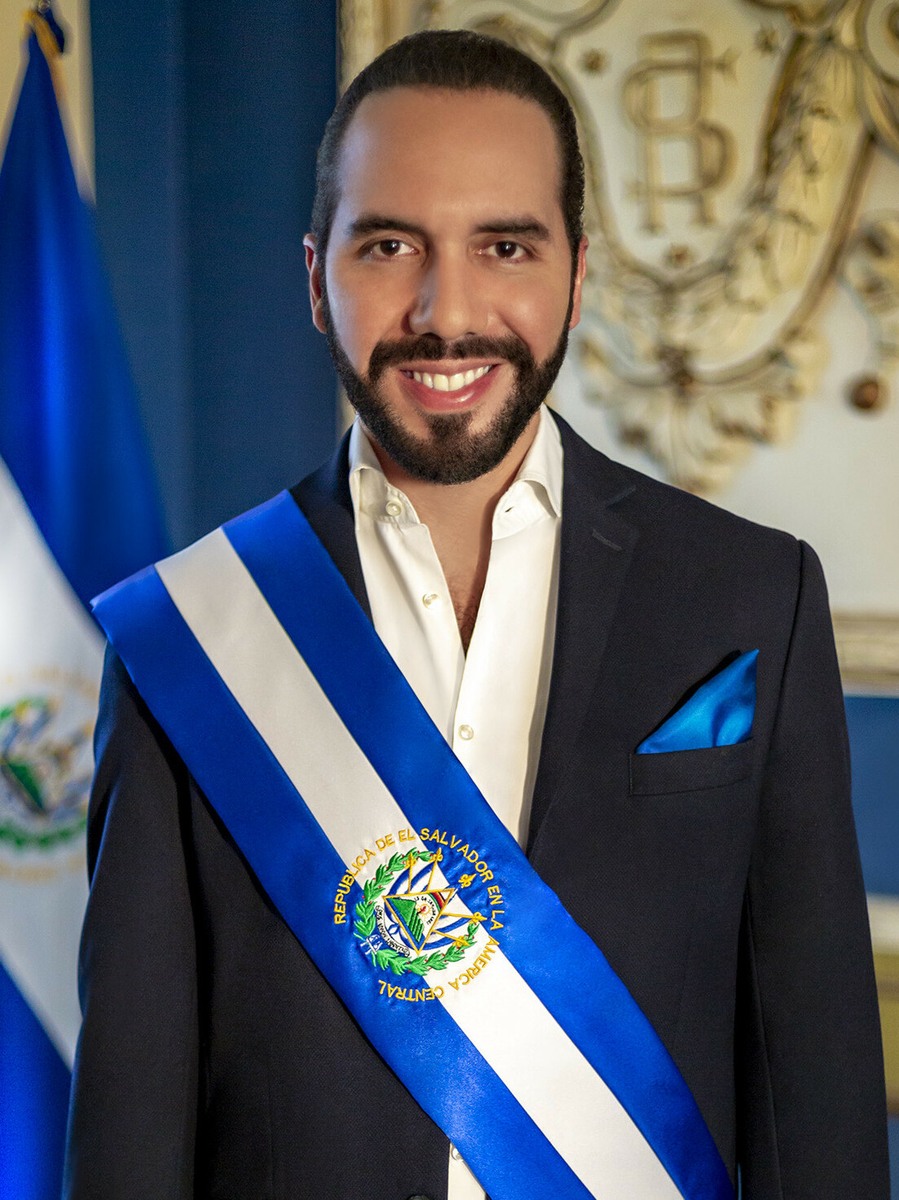
But here is the cost side of the ledger, and it must be printed in the same ink. El Salvador's state of exception, in force since March 2022, has swept up more than 93,000 people by the government's own figures. CECOT holds men incommunicado — no family visits, no lawyers, lights burning around the clock — and the government has said its prisoners will never leave. Human Rights Watch and Cristosal documented systematic torture of Venezuelan deportees held there. Amnesty International counts at least 470 deaths in Salvadoran custody in four years and warns the practices may amount to crimes against humanity. Two Salvadoran soldiers died in Haiti on Friday, handling explosives — the first deaths of a deployment of some 2,500 troops who arrived in October, most of them operating outside the UN-authorized Gang Suppression Force. Four Salvadoran technicians have been missing since October 18, their fate still disputed. This is the model Haiti is now importing: effective, feared, and priced in a currency nobody wants to count.
Now the ten-thousand-pound elephant in the room, the one no prison contract will ever name. Why do young men join gangs?
They join because they are poor. They join because the door to every other life — school, work, dignity — was closed and locked long before any gang offered them a gun and a wage. Haiti's gangs did not fall from the sky. They grew in soil tilled for generations by an elite that treated the country as a private estate and its people as a cost of doing business. Men who felt taken advantage of organized, armed themselves, and told their neighborhoods they would be the answer. And then — this is the part of the story that repeats across our whole region, from Port-au-Prince to Kingston — the gangs got power, and they forgot why they were created. The protector became the predator. The people, squeezed between an elite that robbed them quietly and gangs that rob them loudly, got fed up with being taken advantage of by the man next door. And the cycle continues, because at no point in the cycle does anyone address the reason the cycle exists.
A prison is an intervention of exactly one kind: it intervenes in a man's address. It does not intervene in the poverty that recruited him at fourteen. It does not build the school, fund the trade, prosecute the elite financier who armed the gang in the first place, or restore the state whose absence made the gang a government. Build three prisons, build thirty — if the conditions that manufacture gang members are left untouched, the prisons will fill as fast as they are built, and Haiti will be back in this same headline in five years, buying more cells.
None of this means Haiti should do nothing while gangs strangle the capital. A state that cannot protect its people has already surrendered. The question is not whether Haiti needs security — it needs it desperately, and the Salvadoran partnership, the troops, even the prisons may all be necessary chapters. The question is whether anyone in this deal is writing the other chapter: jobs, schools, courts that actually try cases, and a reckoning with the elite money that has always stood behind the guns. Eighty-two percent of the people in Haiti's prisons today have never been convicted. A country that locks up the unconvicted in subhuman conditions while the architects of its misery sip coffee in Pétion-Ville is not solving its problem. It is storing it.
Bukele has shown the region what iron can do. The Caribbean is watching Haiti to see whether anyone there will show what justice can do. Prisons may hold the men the gangs made. Only addressing why the gangs were made will stop the making.
OUR VIEW
Austen Anguina, President — CaribbeanTube
Let me be frank, because our readers deserve frankness over diplomacy.
I look at Nayib Bukele and I see a law-abiding, ethical man who has done incredible things in El Salvador. He took a country that was bleeding in the streets and made it safe for ordinary people to live their lives. I will not pretend otherwise, and nobody who has watched mothers in San Salvador walk home at night without fear should pretend otherwise either.
But when I look at this prison deal, I have to ask the question out loud: is this patriotism, is this philanthropy — or is this business as usual, the old business of locking up people of color, now wearing a new flag?
Here is my opinion, and I will own it. Young men do not join gangs because they are born wicked. They join to escape poverty. The gangs of Haiti began because the people felt the elite were taking advantage of them — felt it because it was true. Men organized to protect their own, and then power did what power does: they got the power and forgot the reason they were created. Now the people are squeezed from both sides, taken advantage of by the elite above them and the gunman next door, and they are fed up. So the state builds prisons. The prisons fill. And the cycle continues — because at no point does anyone address the reason.
Instead of creating interventions, we provide incarceration. The problems still exist, because nothing was addressed.
Haiti needs security today; I am not naive, and neither are the Haitians marching with "Thank you, Bukele" signs — they are exhausted, and exhaustion is its own argument. Take the help. Build what must be built. But if this deal ends at concrete and bars, it will fail the very people it claims to save, and five years from now we will be writing this same article with bigger numbers.
Count me as a friend of what Bukele achieved. Count me as a skeptic of any solution that locks up the symptom and leaves the sickness exactly where it found it.
— Austen Anguina
Reporting note: The prison-construction agreement was reported by the Associated Press on November 20, 2026; as of publication, no other major outlet had independently confirmed its terms, and neither government had published the agreement's text, cost, or financing. The broader Haiti–El Salvador cooperation agreement was approved by Haiti's Council of Ministers on November 17, 2026, and reported by AFP, CMC, and AP. Figures on Haiti's prisons are from the UN Secretary-General's report of July 14, 2026. Figures on El Salvador's arrests are Salvadoran government figures reported in October 2026.